
 Car Stereo
 Car Speakers
 Car Subwoofers
 Cars Amplifiers
 Car Equalizers
 Car Multi-Media



 Audio Processors
 CAM Recording System
 Cameras
 GPSs
GPSs Led Lights
 Mirrors
 Remote Controls
 Tinting Films
 Windshields
 Cut-in & Lid Kits
 Harnesses
 Plates
 Speaker Grills
 Speaker Pods
 Wires & Cables


GPSs

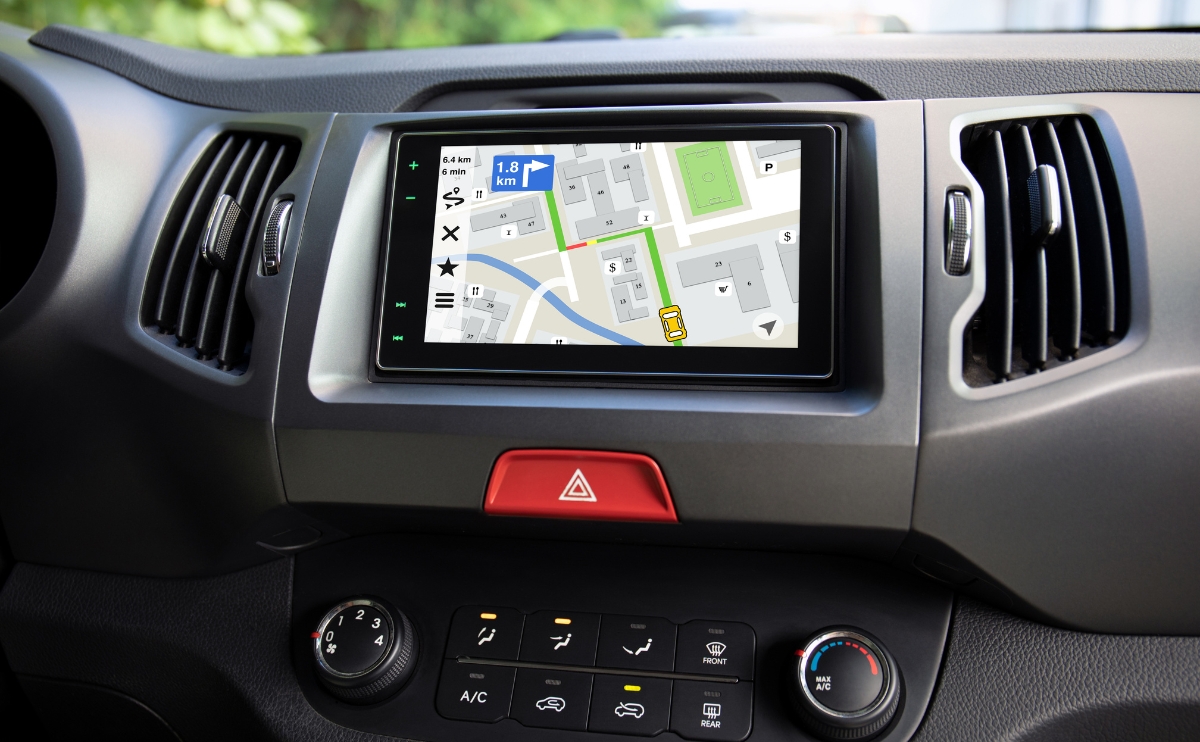
About GPSs
The Evolution and Impact of GPS
Navigating the World with Precision
Global Positioning System (GPS) technology has revolutionized the way we navigate the world, providing unprecedented precision and convenience in location tracking.
In the modern era, the Global Positioning System (GPS) has become an indispensable part of everyday life, revolutionizing how we navigate the world. From helping drivers find the fastest route to work, to enabling emergency services to locate those in need, and even allowing us to tag our exact location in a social media post, GPS technology has permeated countless aspects of our daily routines. However, the journey of GPS from a military innovation to a global utility is a fascinating tale of technological advancement and strategic foresight.
Initially developed by the United States Department of Defense for military applications, GPS has since become an integral part of everyday life, influencing various sectors such as transportation, agriculture, and emergency services.
Origins and Development
The origins of GPS can be traced back to the Sputnik era of the 1950s, when scientists realized that they could track satellites in space by monitoring their radio signals. This led to the development of the first satellite navigation system, TRANSIT, used by the United States Navy to improve the accuracy of its submarines’ ballistic missiles. However, the TRANSIT system had limitations, such as infrequent satellite passes, which led to the conception of a more advanced and precise system.
In 1973, the U.S. Department of Defense initiated the development of NAVSTAR GPS, a system designed to provide continuous global coverage. The project faced numerous challenges, including political and budgetary constraints, but eventually saw the launch of the first experimental Block-I GPS satellite in 1978. By the mid-1990s, the constellation of at least 24 satellites was completed, providing full operational capability.
Technological Mechanics
At its core, GPS is a satellite-based navigation system that provides location and time information in all weather conditions, anywhere on or near the Earth's surface. The system operates through a network of satellites that transmit signals to GPS receivers on the ground. Each GPS satellite continuously broadcasts a signal that includes its current position and the precise time the signal was transmitted. A GPS receiver uses the time it takes for the signals to reach it from at least four satellites to calculate its current position, utilizing a process called trilateration.
Civilian Applications and Advancements
Initially, GPS technology was restricted to military use. However, recognizing its vast potential for civilian applications, the U.S. government made GPS available for public use in the 1980s. This decision unlocked a myriad of applications across various sectors. In transportation, GPS has transformed logistics and fleet management by optimizing routes and reducing fuel consumption. In agriculture, precision farming relies heavily on GPS for everything from field mapping to automated steering of machinery, increasing efficiency and yield. Furthermore, GPS technology is crucial in disaster response, environmental monitoring, and geotagging for digital photography.
The integration of GPS with other technologies has further expanded its capabilities. For example, combining GPS with Geographic Information Systems (GIS) has enabled more detailed and interactive mapping solutions. The advent of smartphones has also made GPS accessible to the masses, embedding it into apps that manage everything from fitness tracking to augmented reality games.
Challenges and Future Prospects
Despite its widespread adoption, GPS technology faces ongoing challenges. Signal interference, whether due to natural phenomena like solar flares or intentional jamming, can affect accuracy and reliability. Furthermore, the system's dependence on satellites makes it vulnerable to space weather and potential anti-satellite weaponry. To mitigate these risks, research is ongoing into alternative systems and technologies such as terrestrial-based navigation and the integration of additional satellite constellations like the European Union's Galileo or Russia's GLONASS, aimed at enhancing robustness and accuracy.
Looking forward, the future of GPS holds exciting possibilities. Innovations such as real-time kinematic positioning, which offers centimeter-level accuracy, are set to revolutionize industries that require high precision, such as autonomous vehicles and drone technology. Moreover, as the Internet of Things (IoT) continues to grow, GPS will play a critical role in connecting and managing the vast array of devices and systems that comprise our increasingly digital world.
Conclusion
GPS is far more than just a tool for getting from point A to point B; it is a transformative technology that has reshaped how we interact with the world. Its development from a military tool to a global utility underscores the power of technological innovation to drive societal change. As we continue to explore new applications and enhance its capabilities, GPS will undoubtedly remain a cornerstone of modern navigation and a catalyst for future technological advancements.